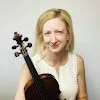
Shades of Blues
Gershwin, Price, and Schumann highlight themes from the Roaring Twenties
Gershwin: Three Preludes (arranged for piano trio by Jasha Heifetz and William Primrose)
George Gershwin (1898–1937) was the quintessential American composer, seamlessly blending classical European structures with the intoxicating rhythms and harmonies of jazz, blues, and popular song. Originally written for solo piano in 1926, the Three Preludes epitomize this fusion, offering miniature sketches that are both virtuosic and deeply rooted in the American blues soundscape. The trio arrangement we perform today maintains the piano’s central role while enriching the texture with the distinct voices of the violin and cello. The first prelude begins with a driving, blues-infused perpetual motion that sounds instantly recognizable as New York in the Roaring Twenties. Its rhythmic intensity is both sophisticated and visceral. A languid, expressive blues theme of the second prelude captures the melancholic side of jazz. Its tender melody and rich harmony offer a moment of introspection before the final flourish. The third and final prelude is a vibrant, rhythmically complex piece that brings the set to a dazzling conclusion. It shares the energy of the first prelude but introduces new melodic material, cementing Gershwin's mastery of syncopation and irresistible flair.
Florence Price: Pastiche
Florence Price (1887–1953) was the first African American woman to have a symphony performed by a major American orchestra. A composer of extraordinary skill and sensitivity, her work integrates European romantic tradition with the sounds of African American spirituals and folk dances. This "Pastiche" presents a curated selection of her chamber music, highlighting her lyricism and mastery of different emotional landscapes. Adoration for Cello and Piano is a deeply felt, soulful melody that perfectly showcases Price's gift for sublime, spiritual expression. Fantasie No. 1 in G minor reflects Price’s remarkable fluency in combining post-Romanic harmonies with the idioms of African-American folksong.
Clara Schumann: Piano Trio in G minor, Opus 17
Clara Schumann (1819–1896) was one of the most celebrated pianists of the Romantic era, yet her formidable career as a composer has only recently received the recognition it deserves. Written in 1846, her Piano Trio in G minor is arguably her masterpiece—a work of substantial length, depth, and emotional power that stands proudly alongside the chamber music of her husband, Robert Schumann, and her dear friend, Johannes Brahms. It is a work that manages the challenging task of balancing lyrical intimacy with dramatic, large-scale architecture.The opening movement is passionate and tempestuous, immediately establishing the G minor tonality's dramatic weight. The interplay between the strings and the piano is complex and virtuosic. A light-footed scherzo with hemiola syncopations provides a welcome contrast to the opening snap rhythms in the second movement. The third movement, “Andante,” is the heart of Clara Schumann’s trio; this slow movement is marked by its profound lyricism and searching, intimate melodies. The finale is energetic and optimistic, concluding the work in a confident G major, transforming the dramatic tension of the opening into joyful resolution.
Gershwin: I Got Rhythm
So which came first, William Grant Still’s Afro-American Symphony or Gershwin’s I Got Rhythm? Gershwin's "I Got Rhythm" (from Girl Crazy, 1930) came out first, but William Grant Still began composing his Symphony No. 1, "Afro-American," shortly after, with its scherzo movement featuring a theme similar to Gershwin's hit, a theme Still claimed originated from his own improvisation years earlier while playing oboe in the orchestra for the musical "Shuffle Along.” So, Gershwin's song was published first, but the musical connection between them stems from Still's belief that Gershwin adapted a melody Still had played in the pit. If Oscar Wilde was correct that “Imitation is the sincerest form of flattery," surely they both would agree it is a tune now for the ages!